
How to Launch and Grow a Successful Electronics Manufacturing Business
For local business owners, community organizations, and aspiring electronics manufacturers considering electronics manufacturing startups, the opportunity is real, but so are the early constraints. The core entrepreneurship challenges usually show up fast: earning trust without a track record, proving product reliability, and building a steady pipeline while every mistake is costly. Market entry barriers can feel unforgiving, from tight expectations on quality and consistency to the pressure of supply uncertainty and compliance demands. Clarity on industry opportunities and the realities behind them helps founders choose smarter bets and build a business that lasts.
Build a Solid Base: 4 Non‑Negotiables for New Manufacturers
Early excitement can hide the operational “gotchas” that slow new electronics manufacturers down, supplier surprises, quality escapes, and compliance rework. Use these non‑negotiables to turn the opportunities you spotted into a stable, buildable plan.
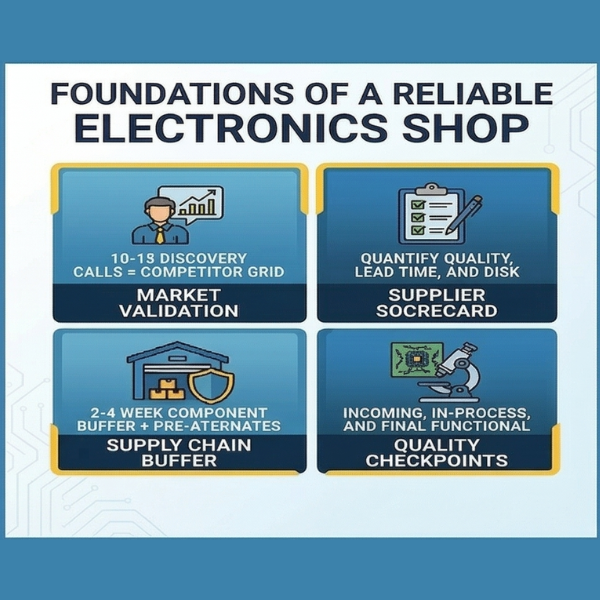
- Prove demand with quick, specific market research: Start with 10–15 discovery calls with the exact buyer you want (OEM engineer, purchasing manager, local product company) and ask what they can’t get reliably today, lead time, low-volume builds, rework support, documentation, or price stability. Then validate with a simple “competitor grid” (3–5 competitors, their minimum order quantities, lead times, certifications, and typical customers). Finish by writing a one‑paragraph value proposition and a shortlist of 2–3 product categories you will not take yet, so you don’t repeat the “trying to serve everyone” barrier.
- Standardize supplier evaluation before you request quotes: Create a one-page scorecard you use for every vendor, quality system, lead time, pricing stability, communication, and risk (single-source parts, geopolitical exposure, allocation history). A structured approach that includes weighting and quantifying criteria helps you choose suppliers that fit your priorities instead of whoever replies fastest. Require proof points early (sample COAs, change-notice process, references), and run a small “trial order” before you commit to production volume.
- Design your supply chain to survive delays, not just to minimize cost: Build a basic bill of materials (BOM) risk list and flag any part with long lead times, sole sourcing, or frequent revisions. Set simple rules: keep 2–4 weeks of buffer for your top 10 constraint components, pre-approve alternates, and define who can authorize substitutions. Document your purchasing cadence (weekly buys, monthly forecast check-ins) so your inventory doesn’t drift into the cash-flow problems you identified when sizing up entry barriers.
- Lock in quality control processes with checklists at the right moments: Don’t wait for failures to define “quality.” Set three checkpoints: incoming inspection (components), in-process checks (assembly), and final test (functional + visual), and write a checklist for each. In electronics, pre-production checks like verifying component specifications and controlling humidity/ESD practices prevent expensive rework and reputation damage. Track every defect with a simple log: what failed, where it was found, likely cause, and corrective action.
- Treat regulatory compliance and industry standards as a product feature: Make a compliance folder from day one: product safety requirements, labeling, restricted substances, and customer documentation needs. Keep a “standards map” for your niche (for example, quality management, ESD handling, and any sector-specific requirements) and confirm what your target customers expect before you quote. Assign one person, often the founder at first, to own change control, recordkeeping, and supplier documentation so compliance doesn’t become a last-minute scramble.
These habits give you clean inputs, validated demand, reliable suppliers, controlled materials, and repeatable quality, so your day-to-day work can run on a consistent production flow instead of constant firefighting.
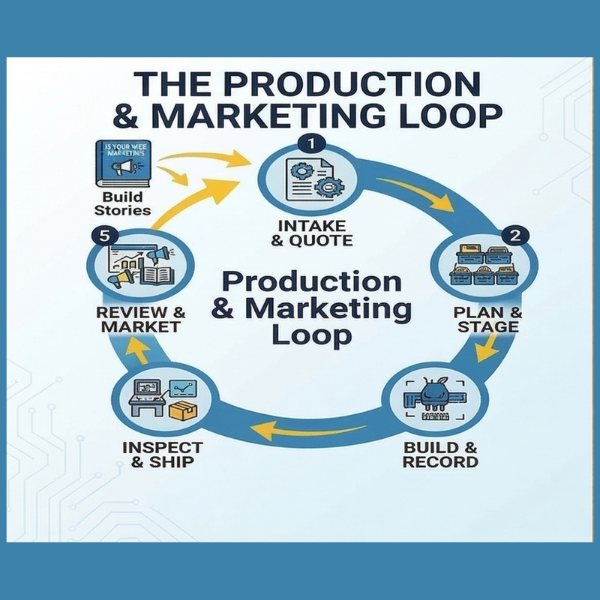
Intake → Build → Inspect → Ship → Learn
To make these steps sustainable, try this simple rhythm.
This workflow turns your daily production work into a predictable loop you can manage, measure, and market. For small electronics manufacturers, consistency is what creates customer trust, repeat orders, and clearer messaging because you can confidently promise lead times and quality. It also gives you a clean place to add process automation and real-time quality inspection with machine vision hardware for automation once the basics are stable.
Each stage feeds the next: clean intake makes planning accurate, good planning makes builds calmer, and real-time inspection turns issues into quick corrections. The weekly review closes the loop so your process improves without constant reinvention.
Run the loop for four weeks, then tighten one stage.
Electronics Manufacturing Startup FAQs
Here are quick answers to common launch-day concerns.
Q: What regulations and certifications should I plan for first?
A: Start by listing where you will sell and what your device does, then map that to the required safety, EMC, and environmental rules. Many founders define product compliance as the practical work of making sure your product meets the standards set by governing bodies. Your next step is to create a one-page compliance plan that names the standard, test lab, and required labels.
Q: How do I avoid expensive rework when going for certification?
A: Test design early, lock critical components, and document revisions so you can prove what changed and why. Run a pre-compliance check or pilot build to catch layout, grounding, and enclosure issues before paying for full lab time.
Q: When should I implement a quality management system like ISO 9001?
A: Implement the fundamentals as soon as you have repeat orders: document control, training, nonconformance handling, and traceability. You can stay lean by writing only the procedures you actually follow, then expanding as customer requirements grow.
Q: What marketing actually works for a new electronics manufacturer without a big budget?
A: Lead with proof: capability sheets, test evidence, and short build stories that show outcomes. Since social commerce will be a $79.64 billion industry in the US by 2025, prioritize channels where buyers already research vendors, then post weekly content that answers real sourcing questions.
Q: Can I outsource assembly or testing and still protect my brand?
A: Yes, if you control specs, inspection criteria, and acceptance sampling in writing. Start with a supplier scorecard, require first article approval, and keep your own final release checklist so your name stays tied to consistent results.
Small, documented steps reduce risk and make your quality and marketing claims easy to defend.
Pair Engineering With Demand: A Results-Driven Marketing Playbook
Great electronics work doesn’t sell itself, especially when buyers are comparing suppliers online long before they call. Use the tips below to connect your technical expertise in electronics to a results-driven marketing strategy that reliably creates visibility and qualified leads.
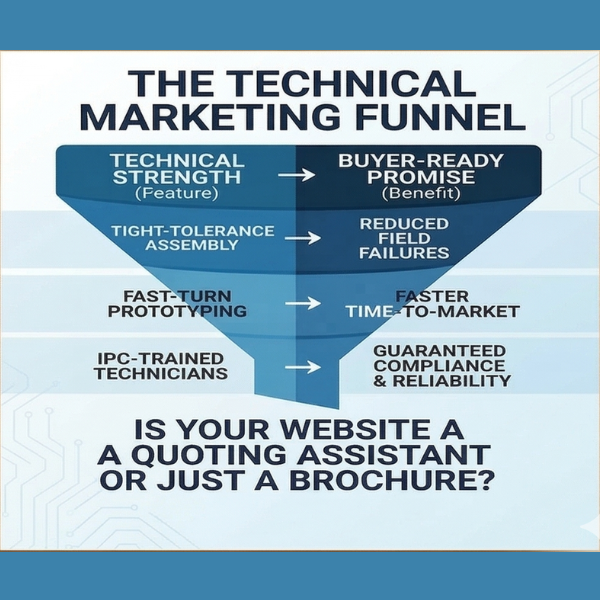
- Translate engineering strengths into buyer-ready promises: Make a short list of your top 3 capabilities (example: tight-tolerance assembly, fast-turn prototyping, IPC-trained technicians) and rewrite each as a customer outcome (fewer field failures, faster time-to-market, smoother compliance). Add proof points you can defend, yield ranges, test coverage, traceability, certifications, and lead times. This helps you market confidently without over-claiming and supports the compliance and quality expectations you addressed in your startup FAQs.
- Build an SEO foundation around how industrial buyers actually research: Create 5–10 core service pages that match search intent: “PCB assembly,” “box build,” “cable harness assembly,” “prototype to production,” and the industries you serve. Prioritize educational content that answers common pre-sales questions because 70% of the decision-making process can happen before a buyer ever contacts a supplier. A full-service partner like Superior Effect Marketing can help structure these pages, optimize technical SEO, and turn your expertise into search-friendly content.
- Design a website that functions like a quoting assistant: For startups, your site should reduce back-and-forth. Add a “Request a Quote” flow that collects the essentials: BOM format, Gerbers/drawings, target quantities, compliance needs (RoHS/REACH), test requirements, and desired lead time. Include trust builders near every conversion point, quality process summary, certifications, and a simple “what happens after you submit” timeline, so buyers feel safe taking the next step.
- Use digital ads to create a predictable lead flow for high-intent services: Start small with one campaign for your most profitable, most searchable offer (example: “prototype PCB assembly in 10 days”). Send traffic to a matching landing page, not your homepage, and track two conversions: quote requests and engineering discovery calls. The benefit of digital advertising is speed; you can validate messaging and demand in weeks, then scale what performs.
- Develop a brand system that matches your quality system: If your documentation is disciplined but your visuals are inconsistent, prospects notice. Define a clear positioning statement (who you serve, what you build, why you’re reliable), then standardize your logo usage, colors, fonts, and tone across your website, capability statement, and quote templates. Superior Effect Marketing can help align brand development with the credibility signals manufacturers need: clarity, consistency, and proof.
- Set up a simple marketing-to-operations feedback loop: Review leads weekly with two questions: “What did they ask for?” and “Why did we win or lose?” Update your website copy, SEO pages, and ad targeting based on real RFQs, and share recurring requests with engineering so quoting templates and test options stay current. This keeps marketing grounded in what your shop can deliver, and helps you choose the few high-impact moves that strengthen your position quickly.
When your messaging, website, SEO, and ads reflect the reality of your process and compliance readiness, demand becomes something you can plan for, not hope for.
Align Production Excellence With Demand to Grow Your Electronics Shop
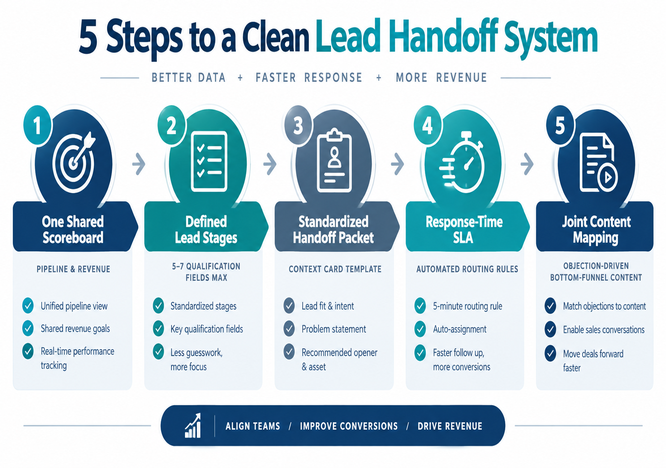
Electronics manufacturers often get squeezed between tight quality requirements and the pressure to keep the pipeline full. The approach that wins is a disciplined focus on manufacturing best practices paired with marketing and operations integration, so what gets built, promised, and delivered stays aligned. When those pieces work together, competitive market positioning becomes clearer, quoting and lead flow are steadier, and business growth strategies feel less like guesswork and more like a repeatable system built on real entrepreneurial success factors. Build what the market needs, and prove you can deliver it consistently. Choose your next 3 moves this week, one to strengthen shop-floor reliability, one to improve visibility, and one to tighten the handoff between sales and production. That focus creates resilience, predictable cash flow, and healthier growth you can sustain.