
How Startups Can Align Marketing and Sales to Boost Revenue and Close More Leads
For startupfounders running an early-stage company, few problems drain momentum likemarketing and sales misalignment. Leads get lost in lead handoff friction,follow-ups stall, and prospects hear mixed messages about what the product doesand who it’s for. The result is avoidable cross-functional team dynamics:marketing feels ignored, sales feels unsupported, and the pipeline starts towobble. When both teams share the same definition of a good lead and aconsistent story, revenue becomes easier to predict.
Understanding Why Marketing and Sales Drift Apart
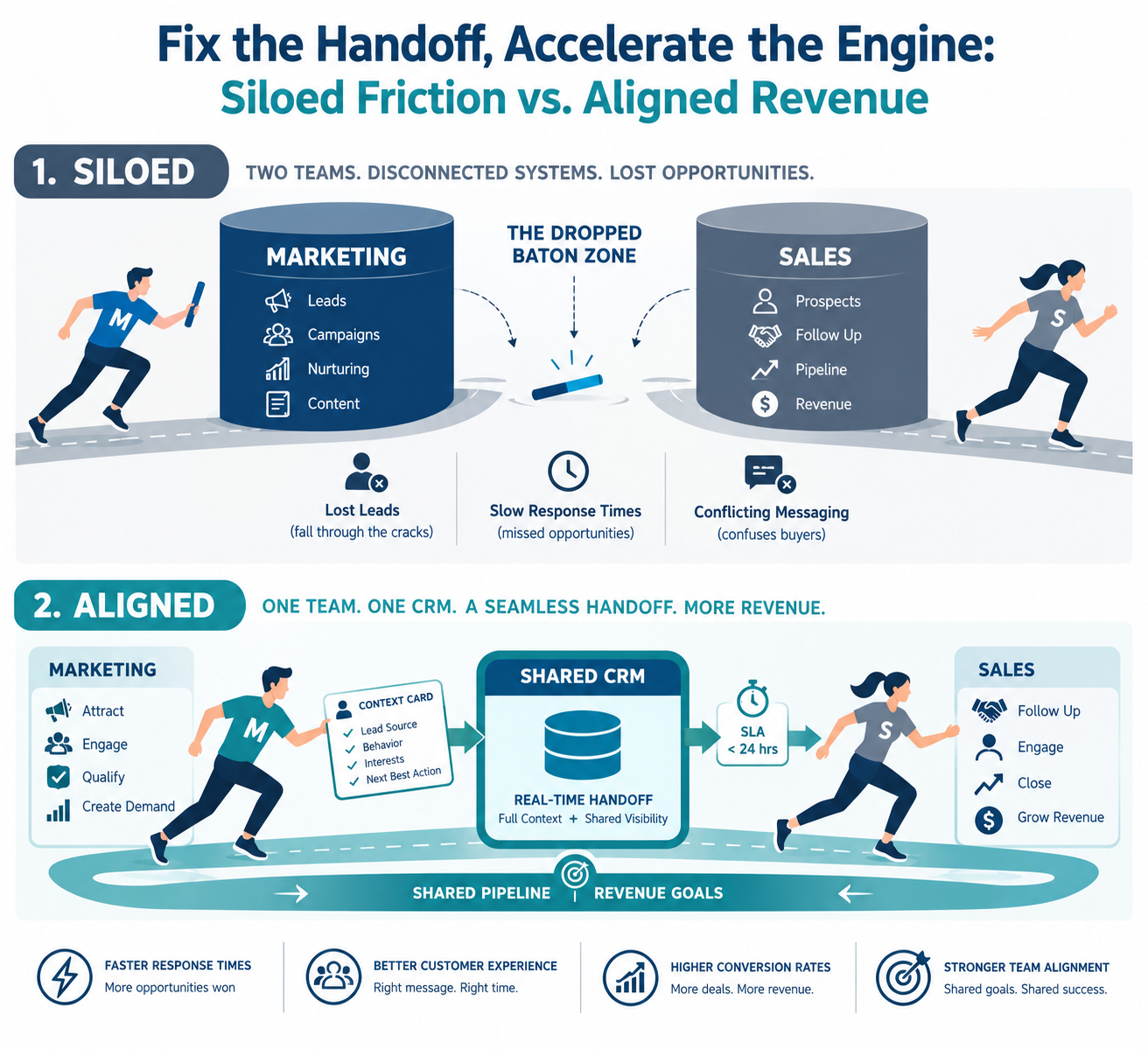
Misalignmentrarely happens because people do not care. It usually comes from unclearownership, different definitions of a qualified lead, and mismatched incentivesthat pull teams in opposite directions. When that drift sets in, your funnelloses shape and your ability to run a predictable engine weakens, since a predictable revenue model depends onrepeatable inputs and consistent handoffs.
This mattersbecause the costs are measurable: lower conversion rates, longer sales cycles,and more deals that quietly die in follow-up. Alignment is the fastest path tostability because it reduces guesswork and makes results easier to forecast.Teams with shared goals often outperform those that operate in silos.
Think of it likea relay race where runners disagree on where the handoff zone starts. Evenstrong runners drop the baton, then spend time arguing instead of finishing.Fix the handoff, and speed returns without adding headcount. That is wherecross-functional leadership turns alignment into a scalable go-to-marketsystem.
Build Cross-Functional Leadershipto Scale Your Go-To-Market
When marketingand sales drift apart, it’s usually a leadership gap, not a talent gap, thatkeeps priorities, process, and accountability from lining up. Business ownerscan use the strategic, cross-functional skills gained from earning an MBA tocreate tighter alignment between teams, clarify who owns which steps, andremove friction in workflows so lead handoffs feel consistent instead ofimprovised. That broader management perspective helps you translate strategyinto day-to-day execution, so both functions operate from the same playbook asyou scale. If you want to build those skills without pausing operations, an online master of business administration online can make it easier to run your business while learning.
Marketing and Sales Alignment:Quick Answers
Q: How do we integrate workflows without adding more meetings?
A: Pick one shared workflow in your CRM and make it the single source oftruth for stages, owners, and next actions. Use automated alerts and a simpledashboard so updates happen in the tool, not in a room. Reserve live meetingsfor exceptions and stalled deals only.
Q: What should our lead qualification criteria include?
A: Start with the lead qualification process basics: fit,intent, budget, and likelihood to convert. Keep it to 4 to 6 fields sales canvalidate quickly on the first touch. If marketing cannot confidently fill afield, remove it or make it optional.
Q: When should marketing hand off a lead to sales?
A: Hand off when the lead meets your agreed threshold and has a clearnext step, like a booked demo or a request for pricing. Add a time rule, suchas routing within five minutes of the trigger, so speed does not depend onsomeone noticing a notification.
Q: How should the handoff be packaged so reps do not start cold?
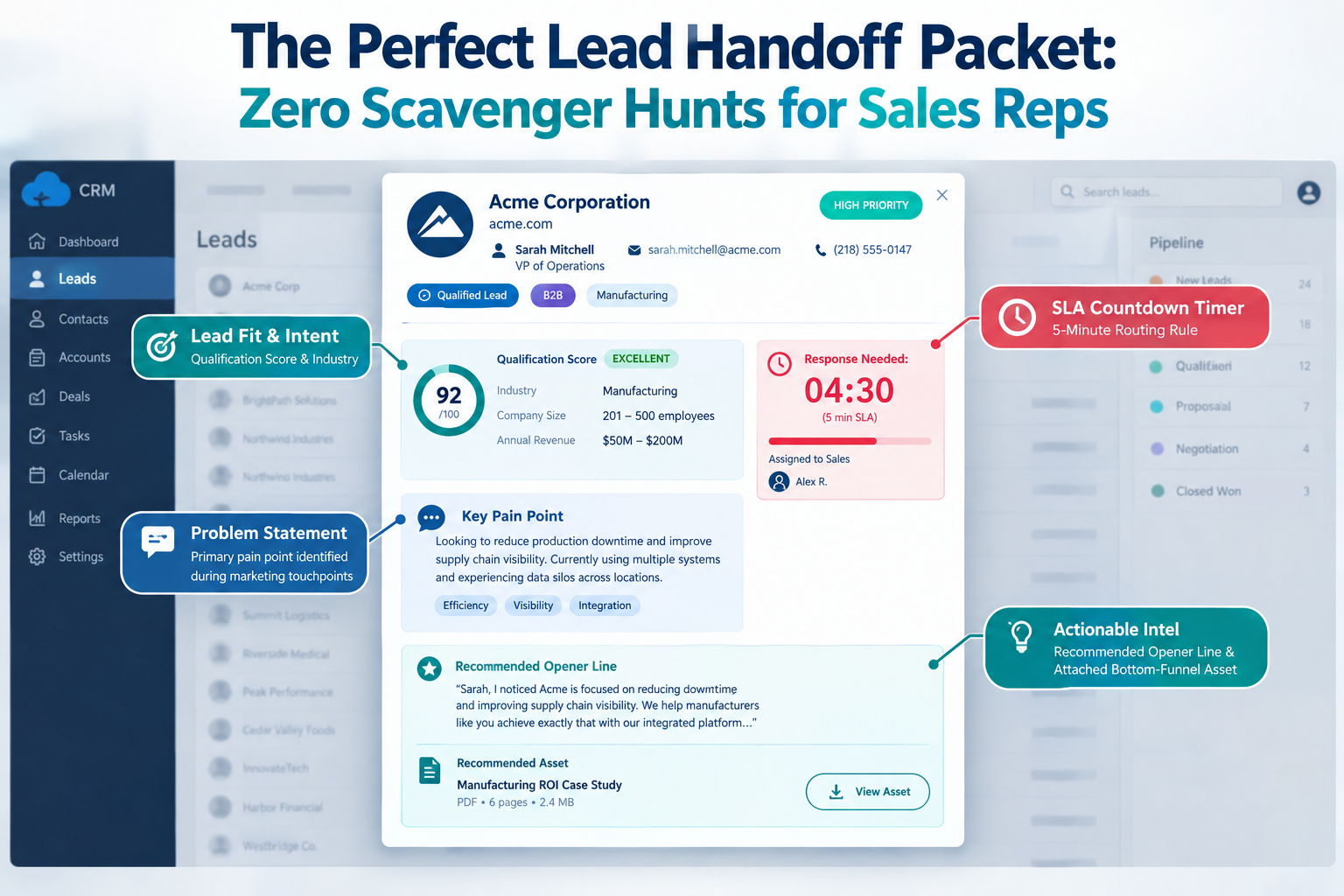
A: Attach a short “context card” to every lead: problem statement,relevant pages viewed, best-fitting use case, and any objections raised.Include one recommended opener line and one piece of content to send, sooutreach stays consistent.
Q: Can salesenablement tools actually help, or are they just extra software?
A: They help when you use them to standardize messaging, surface theright content, and capture what works. The stat that 75% of companies using sales enablement toolssee increased sales is a good reason to pilot one, but keep the rollout narrow.
Use This 5-Part Playbook forClean Lead Handoffs
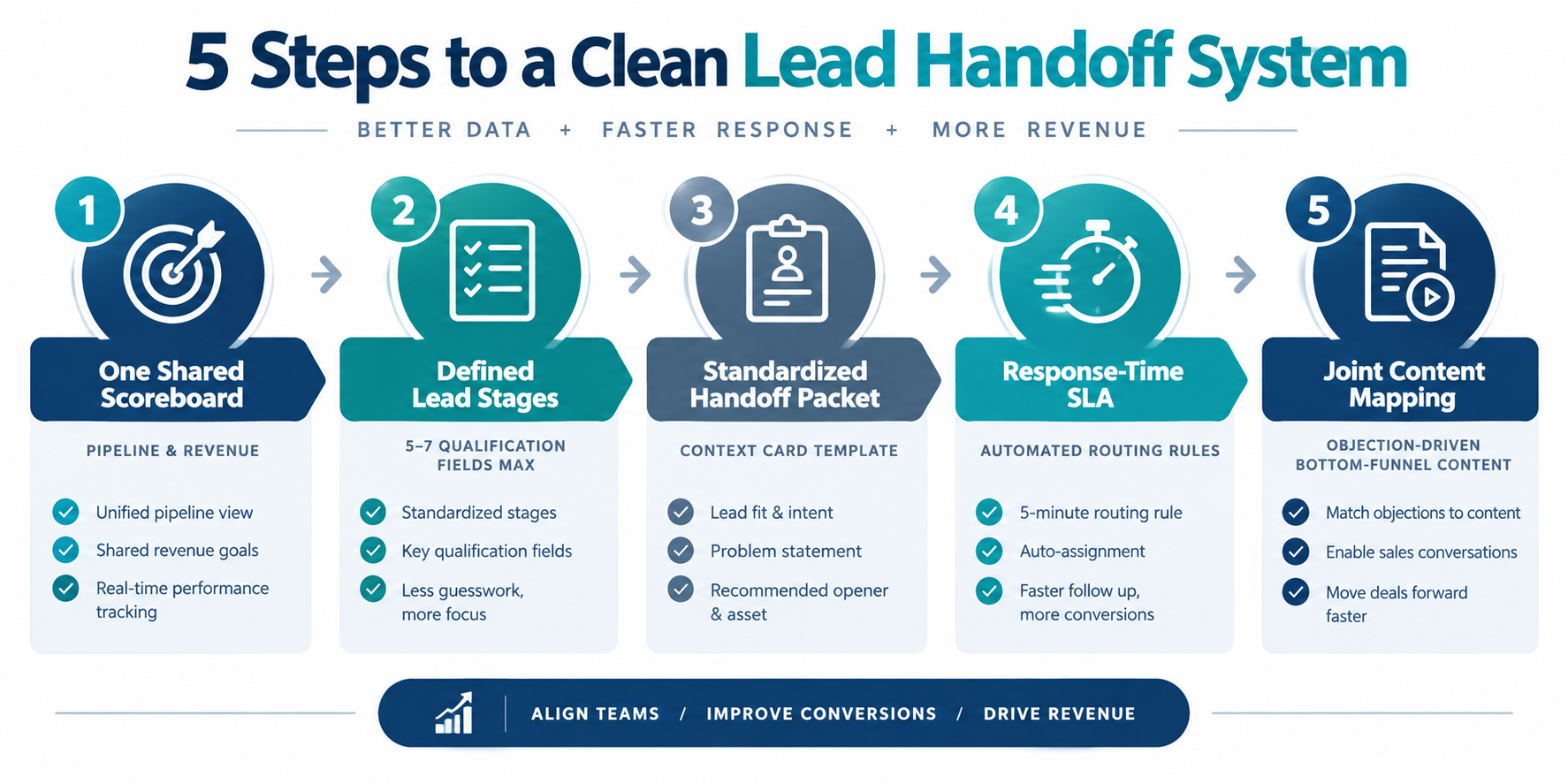
When marketingand sales share definitions and timing, leads stop slipping through the cracks.Use this simple five-part playbook to turn the “handoff” into a smooth relay,so both teams spend time on real revenue.
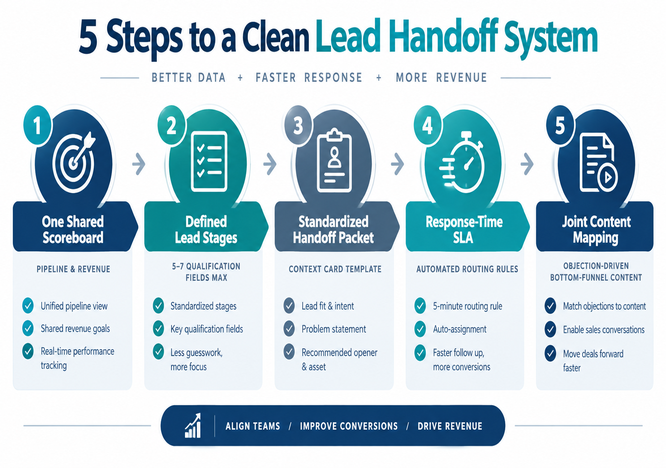
- Set one shared revenue goal (and one shared scoreboard): Pick a single North Star for the quarter such as pipeline created and revenue won, then agree on 2–3 input metrics both teams can influence (qualified meetings held, stage-to-stage conversion, average time-to-first-touch). Review the scoreboard weekly for 15 minutes and decide one fix to test. This builds on the “quick answers” idea of workflow integration without adding more meetings, just sharper priorities.
- Define lead stages with a lightweight qualification framework: Write down what makes a lead “Qualified,” “Sales-Ready,” and “Nurture,” using 5–7 fields max. Include explicit disqualifiers (wrong industry, no budget owner, implementation timeline too far out) so reps can close the loop quickly. Teams that skip this structure often waste 40% of outreach on poor-fit leads, so even a simple checklist can buy back time fast.
- Create a clean handoff packet (copy/paste friendly): Standardize what gets sent to sales every time: contact info, account notes, lead source, intent signals, qualification answers, and the recommended first message. Put it in a shared template and require it before a lead can be assigned. The goal is zero scavenger hunts, sales should be able to personalize outreach in two minutes, not twenty.
- Lock in a response-time SLA, and enforce it with routing rules: Agree on “speed to lead” expectations by segment (e.g., inbound demo requests within 1 business hour, high-fit content leads within 24 hours). If sales can’t hit the SLA, marketing routes those leads into a nurture track automatically and flags them for later follow-up, rather than letting them rot in a queue. This keeps handoffs clean and prevents the “we never called them” blame game.
- Plan content together using real objections and real stages: Once a month, pick 3–5 sales objections and map one piece of content to each stage (problem-aware, comparison, decision). Prioritize bottom-funnel assets sales can send right after discovery, comparison pages, implementation guides, ROI snapshots, so momentum doesn’t stall. A good benchmark for what’s possible is 3,400 conversions after adding more bottom-funnel content, showing how aligned content can translate into pipeline.
Build a Unified Revenue Engine for Faster Deals and Growth
When marketing and sales run on separatetracks, leads get mishandled, follow-up slows down, and trust erodes on bothsides. A unified revenue engine, shared goals, shared definitions, and sharedownership of the pipeline, keeps handoffs clean and decisions simple as volumerises. Done consistently, it drives conversion rate improvement, createsshorter sales cycles, and helps with strengthening customer relationships because prospects get a consistent experience end to end. Revenue grows fastestwhen marketing and sales operate as one team around one pipeline.