
The Website: Why "Done" Is the Most Dangerous Word in Digital
I’m a complete sucker for nostalgia (as we all are), and coming up in the 90’s, I remember the late '90s internet like it was yesterday. However many years later, it feels like it’s been around my entire life (I WISH I were young enough to claim that), but in my middle school and high school years it was a totally new frontier —a chaotic, loud, and brilliant mess. In those days a website really was a novelty first and foremost. You paid someone a grand to build five static HTML pages, watched a MIDI version of "Livin' La Vida Loca" load in your browser, and promptly forgot about it until your mom’s credit card expired.
That era is dead, thankfully. We’ve collectively evolved past the dark ages of flashing GeoCities backgrounds and auto-playing Flash intros. Yet, a ghost of that old mentality still haunts the modern entrepreneur: the belief that once a website is finished, the work is done.
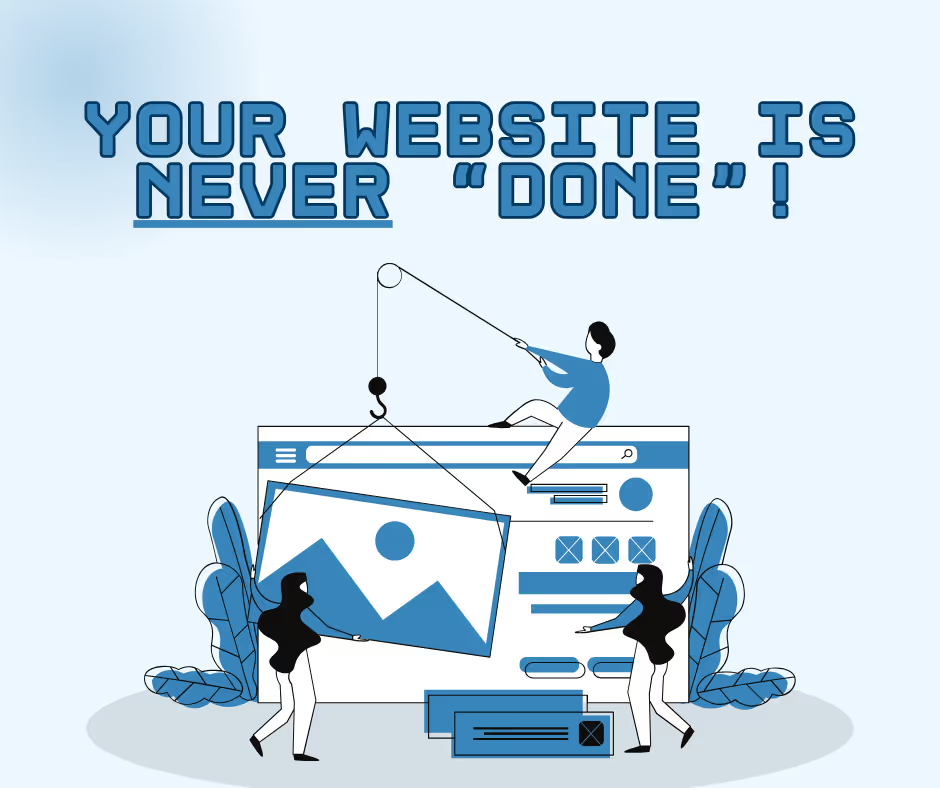
As someone who watches culture move at the speed of a TikTok scroll, let me be clear: in the digital age, "done" is the most dangerous word you can use. Your website isn't a brochure; it’s a living, breathing entity that requires constant maintenance, feeding, and occasionally, a complete personality transplant.
The Great Reckoning: From Novelty to Necessity
The first major reckoning came with the rise of the smartphone. Suddenly, the beautifully designed, full-screen sites—the ones we thought looked so chic—were completely useless. If your site didn’t load instantly on your new smartphone, it was functionally obsolete. This wasn't just an aesthetic update; it was a total structural collapse of the old way of thinking.
We moved into the Functional Era, defined by responsive design and the desperate chase for speed. Forget the maximalist chaos of the early 2000s; the new mantra was clean lines and immediate utility. Design became subservient to user experience (UX). I love this shift toward clean, intuitive interfaces where information is easy to find—it’s what makes browsing so seamless today. It’s what I look for when I’m scrolling through the new Netflix queues or checking out the latest tech reviews.
But this era also introduced the necessary evils. Take the ubiquitous cookie banner and the subsequent GDPR/CCPA privacy pop-ups. Do I absolutely despise that disruptive layer of bureaucratic text that pops up every time I visit a new site? Yes, it's aesthetically tragic and interrupts the user flow. But is it legally mandatory and essential for modern privacy standards? Absolutely. This is the price of admission now, and any business that ignores these necessary evils is leaving itself vulnerable.

The Algorithm Dictates All: The SEO Obsession
If the mobile revolution was the first reckoning, Google's relentless evolution is the second, ongoing one. Your website’s success today isn't measured by how many people visit, but by how well it performs under the constant scrutiny of a search algorithm.
This is where the idea of "constant updating" moves from a suggestion to a survival strategy. Google is constantly shifting the goalposts, demanding better performance, faster load times, and deeper user engagement. We're now deep into the realm of Core Web Vitals, which are essentially Google’s constantly shifting mood swings about site speed, stability, and interactivity.
To stay relevant, you can't just update your text; you need to constantly optimize the underlying technical infrastructure. This includes optimizing image compression, cleaning up old code, and making sure your internal linking strategy is seamless. This constant technical refinement, while vital for visibility, is what often convinces a business owner that the process is simply too much. They ask, "Didn't we just do this?" Yes, you did. And you have to do it again.
The Inevitability of the Rebuild
Even the most perfectly optimized site has a shelf life. Technology moves too fast. The platform that was state-of-the-art five years ago—whether it’s a specific CMS, a coding language, or a payment processor—will eventually become outdated, pose security risks, or simply look tired.
A full website rebuild every few years is not a cost center; it's a critical investment in brand relevance. Think of it like fashion: what looked chic in 2020 might look dated today. Right now, I'm genuinely impressed by seamless micro-interactions and customized scrolling experiences—sites that feel intuitive and anticipate my needs. What I can’t stand are the clunky, repetitive stock photo libraries that make every corporate site look exactly the same. When a website starts leaning heavily on trends from three years ago, it signals that the business is losing pace.
Ignoring the need for a total rebuild means you're not just losing aesthetics; you're creating technical debt. You’re making it harder for search engines to find you and harder for customers to trust you.
The Future: Less Document, More Assistant
Where are websites going next? The evolution is moving toward hyper-personalization driven by AI.
.avif)
Future websites will stop being static collections of pages and start acting more like smart, predictive assistants. Using AI and predictive analytics, your website won't just show a customer what they clicked on; it will anticipate what they need before they even ask. For example, a home builder’s site won’t just show floor plans; it will instantly customize the view based on the user's zip code, average local material cost, and financing options, all processed by AI in real-time.
Content itself will become generative. Instead of writing fifty static blog posts, AI will instantaneously generate unique, perfectly SEO-optimized content based on any niche query a user types in. The website will become the most valuable employee a company has.
And here’s the kicker: this accelerated pace of change means that the need for constant updates and strategic rebuilds will only intensify. The complexity of running an AI-driven, predictive platform will demand even more proactive management than today's simple e-commerce site.
The Takeaway
Your website is your hardest-working employee, your primary salesperson, and your digital face to the world. It’s also perpetually unfinished.
If you treat it like a static document that only needs occasional dusting, it will quickly become obsolete. If you treat it like a living ecosystem that needs constant attention, care, and the occasional total overhaul, it will continue to grow, generate revenue, and keep your business relevant in a world that never stops scrolling.
The work is never "done," but that means the opportunity for growth is endless!